Managing HEDIS performance requires more than reviewing quality measures at the end of a reporting period. Healthcare organizations need reliable data, effective care gap identification, patient outreach, medical record review, and coordinated workflows to improve performance.
Healthcare Revenues provides HEDIS consulting services to help healthcare organizations understand applicable measures, identify care gaps, improve data collection, support medical record review, and develop practical strategies for quality improvement.
HEDIS stands for Healthcare Effectiveness Data and Information Set.
It is a widely used set of standardized healthcare performance measures used to evaluate important aspects of healthcare quality and effectiveness.
HEDIS measures can cover areas such as:
For organizations responsible for HEDIS performance, the challenge is not simply knowing the measures. The real challenge is building processes that consistently identify eligible patients, capture accurate data, close care gaps, and document completed care.
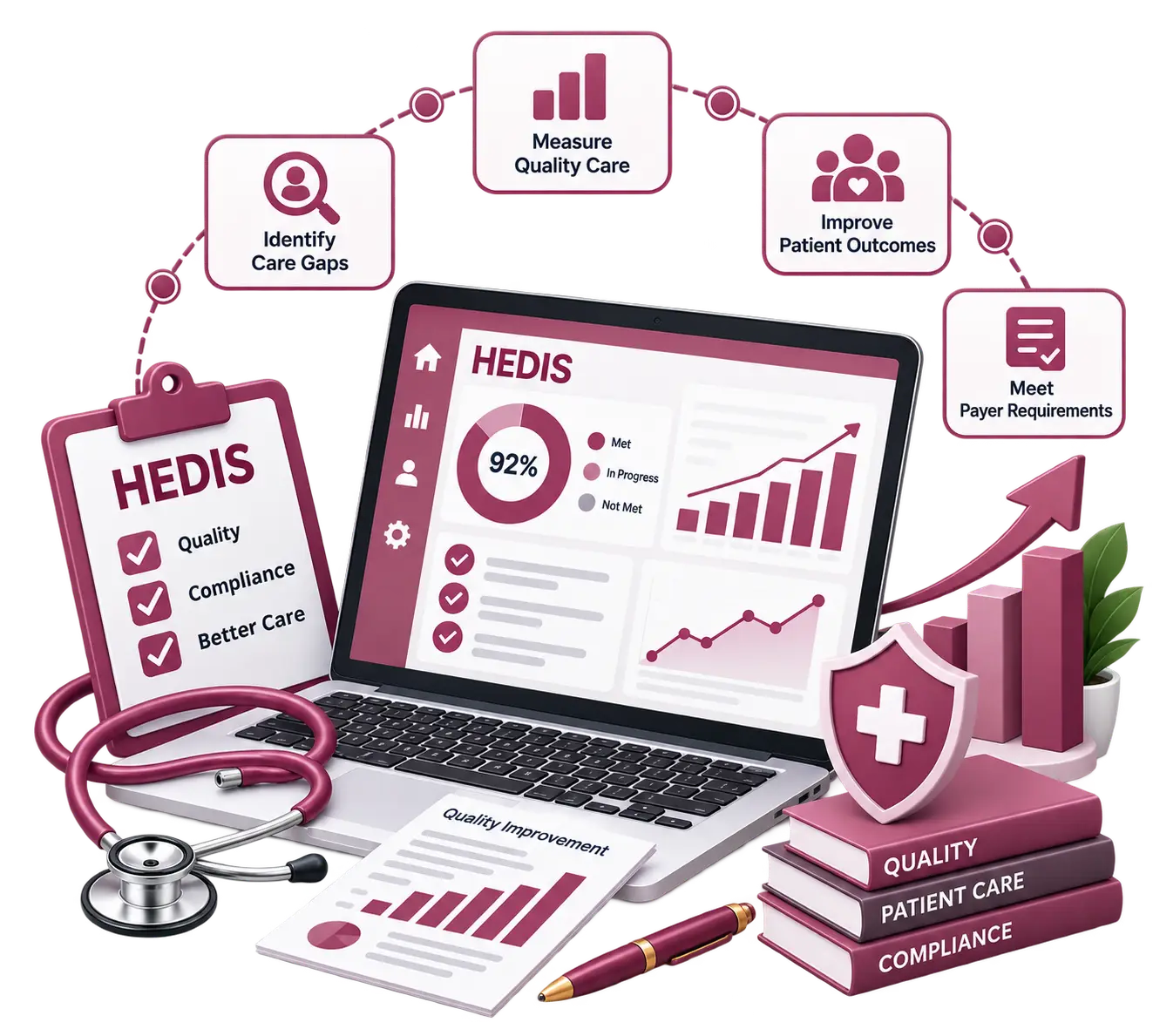
Healthcare quality measurement provides organizations with valuable information about how effectively care is being delivered.
Poorly managed HEDIS processes can result in:
A strong HEDIS strategy allows organizations to move from simply measuring performance to actively improving it.
Healthcare Revenues helps organizations create that connection between measurement, action, and improvement.
Healthcare Revenues provides HEDIS consulting services designed to help organizations manage quality measurement and performance improvement more effectively.
Our support can be tailored to your organization’s specific HEDIS requirements, patient population, available data, workflows, and quality goals.
HEDIS includes numerous measures covering different aspects of healthcare quality.
Depending on the applicable program and population, HEDIS measures can address areas such as:
Helping identify opportunities related to recommended screenings, immunizations, and preventive services.
Supporting quality improvement for patients managing chronic conditions.
Monitoring applicable diabetes-related quality measures and identifying opportunities for improved management.
Supporting quality initiatives related to cardiovascular risk and disease management.
Addressing applicable behavioral health screening, treatment, follow-up, and medication-related measures.
Supporting applicable women's health screening and preventive care measures.
Medication Management Identifying opportunities related to medication adherence, appropriate medication use, and monitoring.
Identifying opportunities related to medication adherence, appropriate medication use, and monitoring.
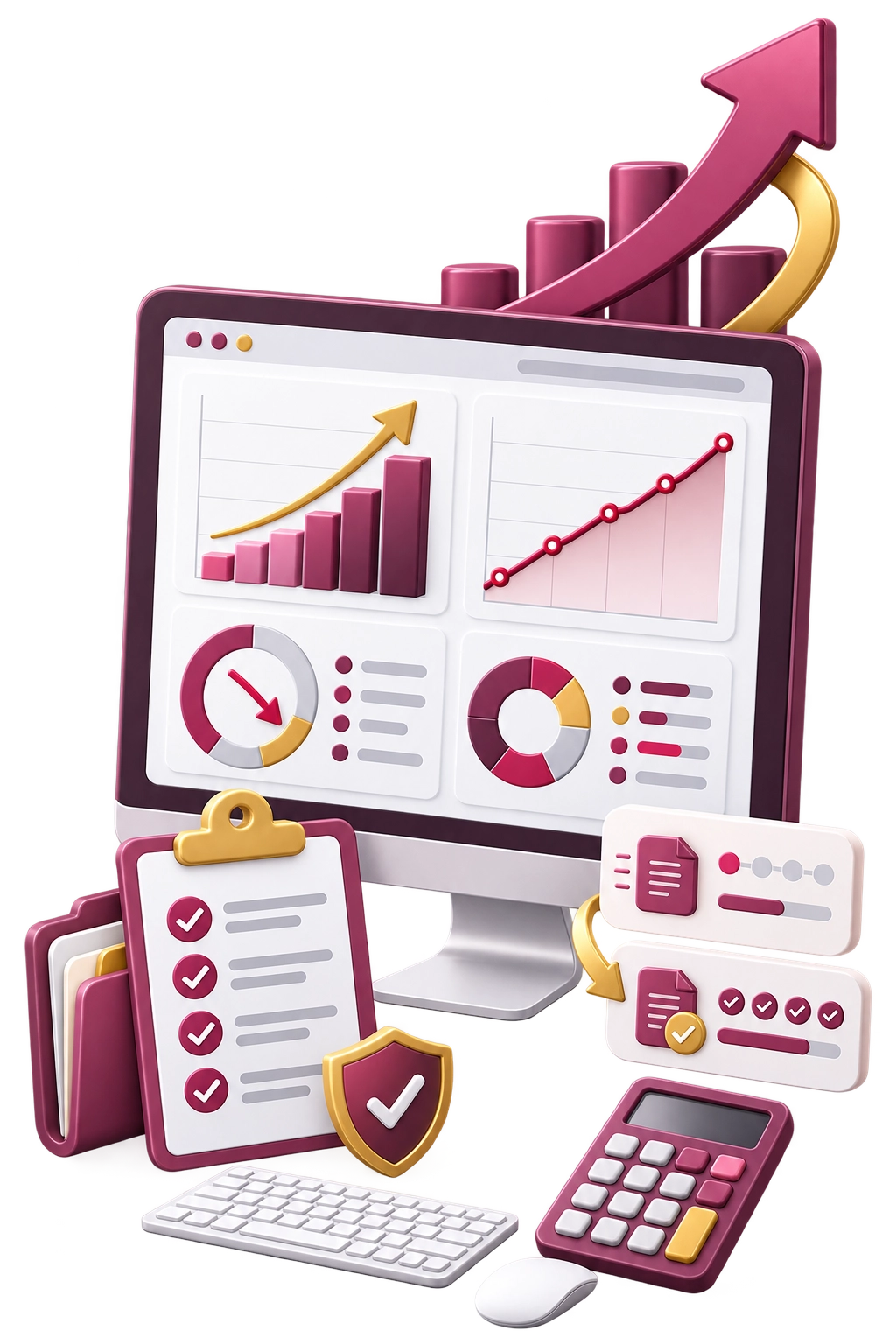
Applicable HEDIS measures vary by program, population, measurement year, and reporting requirements. Organizations should always confirm the measures that apply to their specific program.
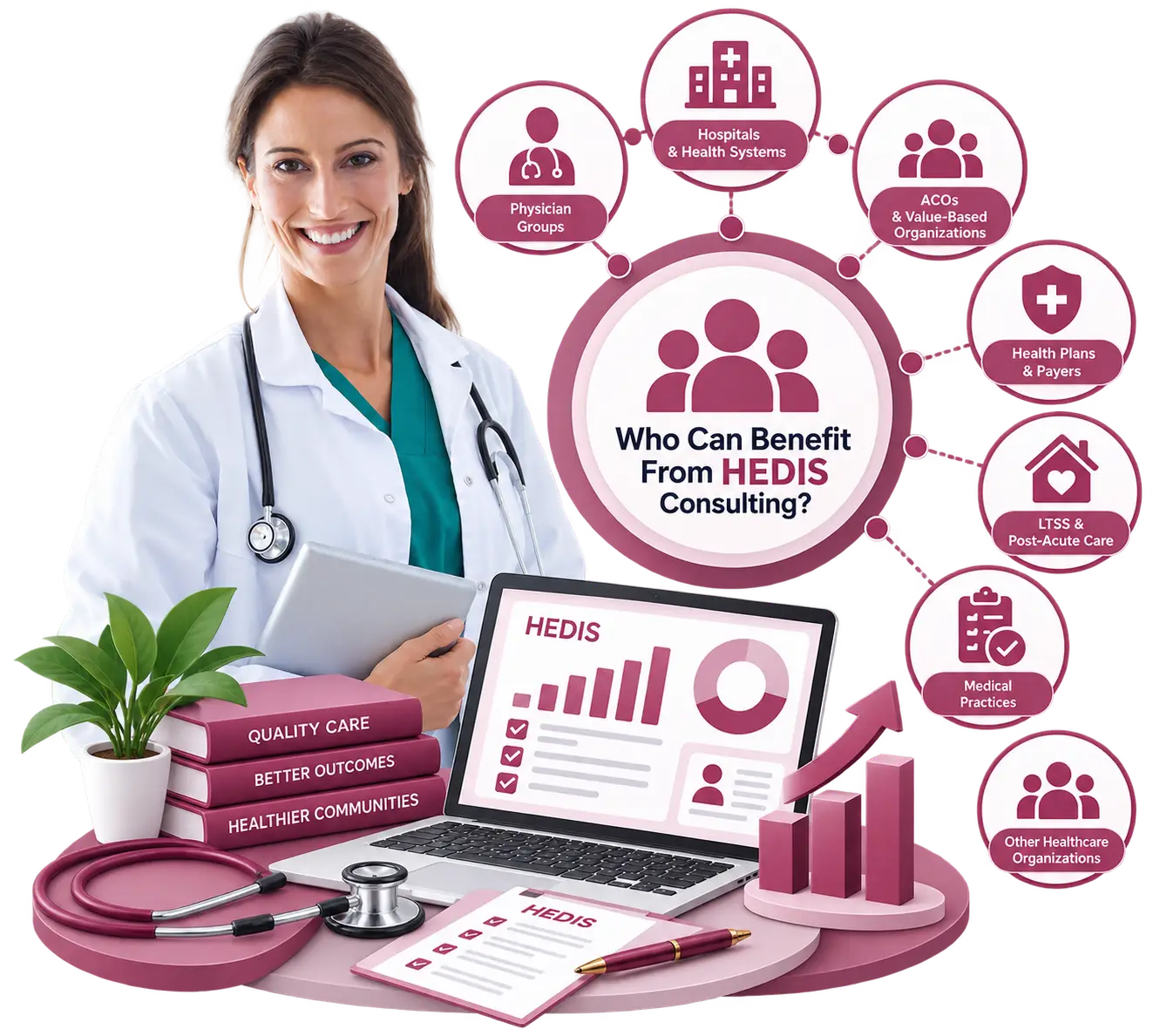
HEDIS consulting can benefit organizations responsible for healthcare quality measurement, performance improvement, and care gap management.
Our services can support:
Organizations with large patient populations or multiple quality measures can particularly benefit from a structured HEDIS management process.
Effective HEDIS management requires coordination between data, clinical teams, administrative staff, and patients.
Our approach helps organize the process from initial assessment through performance improvement.
We develop an actionable strategy for addressing identified performance gaps.
A structured approach can help organizations identify and address opportunities to improve applicable quality measures.
Effective identification, outreach, and follow-up processes can help reduce unresolved care gaps.
Better data management and documentation processes can improve the quality of information available for measurement and reporting.
External HEDIS support can reduce the workload placed on internal clinical and administrative teams.
Structured outreach processes can help organizations connect eligible patients with appropriate care and preventive services.
Consistent documentation processes make it easier to demonstrate that appropriate care has been delivered.
HEDIS data can become a tool for ongoing improvement rather than simply an annual reporting requirement.
PCMH focuses on patient-centered care, care coordination, access, care management, and continuous quality improvement.
HEDIS provides standardized measures that can help organizations evaluate specific aspects of healthcare quality.
These frameworks are different, but PCMH workflows can support HEDIS performance in areas such as:
Healthcare Revenues can help practices align these activities where appropriate and develop a more coordinated approach to quality improvement.
HEDIS and MIPS are different quality frameworks, but there can be meaningful overlap in the types of clinical and operational processes that support performance.
Both can involve areas such as:
Healthcare Revenues helps organizations coordinate these quality initiatives where appropriate rather than managing every program in isolation.
A well-organized quality management strategy can help your organization understand how different performance programs fit into its broader healthcare operations.
HEDIS focuses on healthcare quality, while revenue cycle management focuses on the financial operations of a medical practice.
However, both depend on accurate patient information, documentation, coding, workflows, and data.
For example:
Accurate documentation → Better data → Better quality measurement
And:
Efficient workflows → Better patient follow-up → Better care gap management
Healthcare Revenues brings together HEDIS consulting and broader healthcare operational expertise to help organizations improve processes across clinical and administrative functions.
HEDIS measures can apply across different patient populations and areas of healthcare.
Healthcare Revenues can support organizations working with specialties and healthcare services such as:


HEDIS performance is influenced by more than quality reporting alone.
Patient outreach, clinical workflows, documentation, coding, care coordination, technology, and practice operations can all contribute to the availability and quality of healthcare data.
Healthcare Revenues provides expertise across:
This broader healthcare perspective allows us to help organizations connect quality initiatives with the operational processes supporting them.
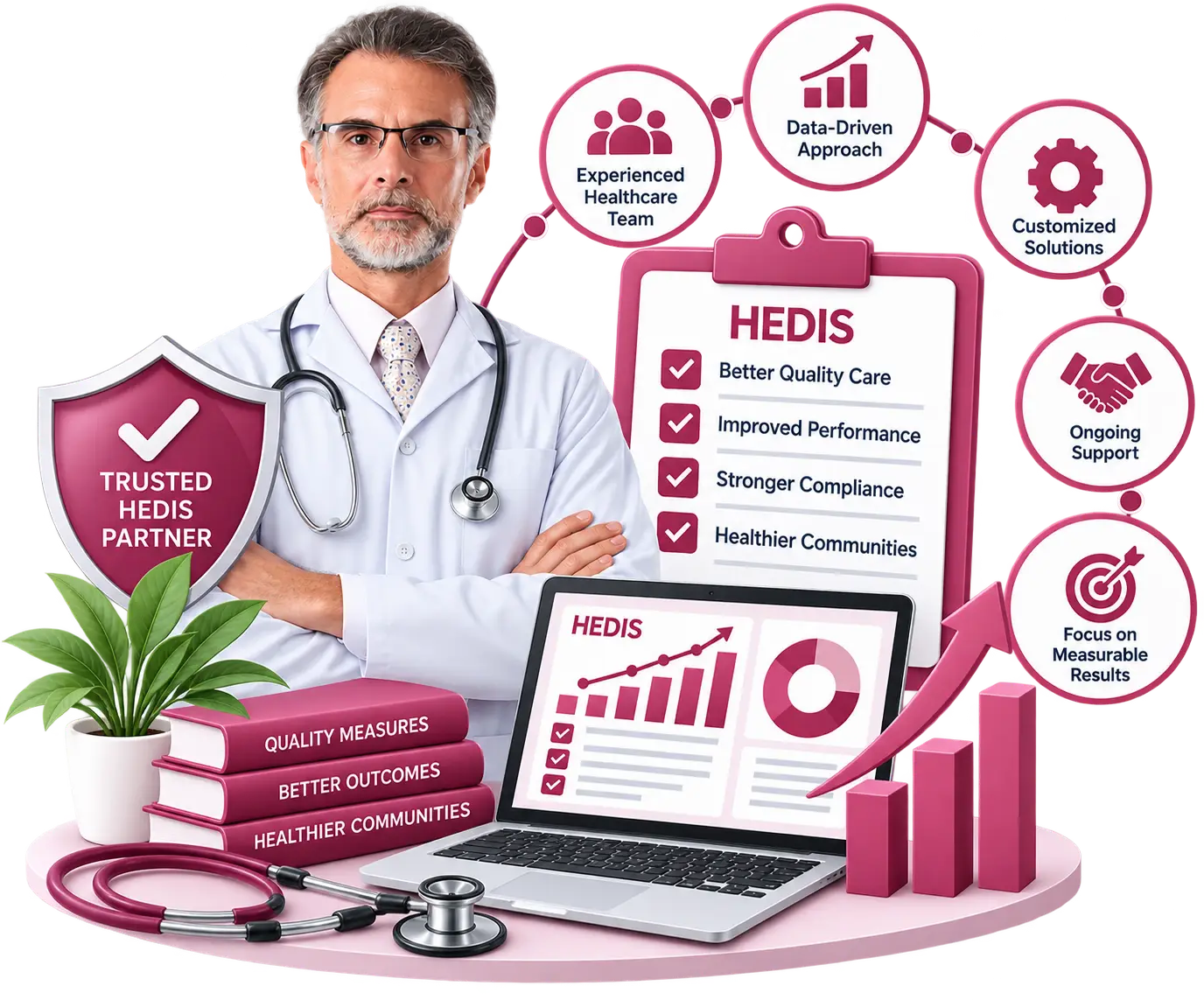
HEDIS consulting provides professional support for healthcare organizations that need help with HEDIS measures, data collection, medical record review, care gap identification, patient outreach, reporting, and quality improvement.
HEDIS stands for Healthcare Effectiveness Data and Information Set.
HEDIS measures are standardized healthcare performance measures used to evaluate different aspects of healthcare quality and effectiveness.
HEDIS measures are widely used across healthcare quality programs, particularly by health plans and organizations involved in quality measurement and performance improvement.
HEDIS covers numerous areas of healthcare quality, which can include preventive care, chronic disease management, behavioral health, medication management, women’s health, children’s health, and other quality areas.
A HEDIS care gap represents an opportunity where an eligible patient may not have received a required or recommended service associated with an applicable quality measure.
For example, a patient may be identified as needing a preventive screening or follow-up service.
Care gap closure can involve patient identification, outreach, appointment scheduling, care coordination, provider intervention, documentation, and follow-up.
The specific approach depends on the applicable measure and patient population.
HEDIS medical record review involves examining patient records for clinical information and documentation relevant to applicable quality measures.
Medical record review can help identify evidence of care that may not be available through other data sources.
Professional consulting cannot guarantee a specific HEDIS score. However, structured quality management, accurate data collection, effective care gap identification, patient outreach, and performance improvement processes can help organizations address opportunities that affect applicable measures.
No. HEDIS and MIPS are different quality measurement frameworks.
HEDIS consists of standardized healthcare performance measures, while MIPS is a CMS program under the Quality Payment Program that evaluates eligible clinicians using applicable performance requirements.
Some clinical and operational activities can support performance across both frameworks.
No. HEDIS and PCMH serve different purposes.
HEDIS focuses on standardized healthcare quality measures, while PCMH is a care delivery and practice transformation model centered on patient-centered, coordinated care.
However, certain quality improvement and care coordination activities can support both.
Yes. Healthcare Revenues provides HEDIS consulting support including quality assessment, care gap management, data and documentation support, medical record review, reporting support, and performance improvement strategies.
Managing HEDIS should not be limited to checking scores at the end of a reporting cycle.
Healthcare Revenues can help your organization identify care gaps, strengthen quality workflows, improve data and documentation processes, support patient outreach, and develop a more consistent approach to quality improvement.
Move from measuring quality to improving it.